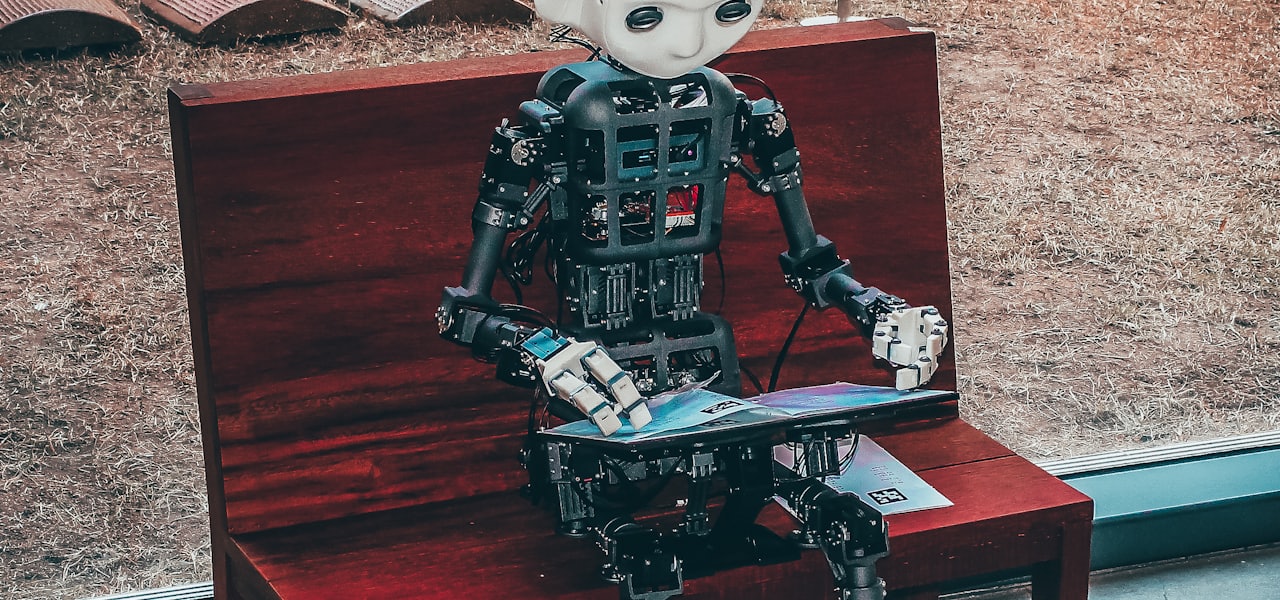
Trying to pick the best AI text-to-image tool? An AI text-to-image tool is software that uses machine learning to help you get more done — it scales effortlessly from a single task to thousands. The best picks balance beginner-friendly simplicity with the depth power users need, and they ship updates often. Whether you are a beginner or a pro, the right AI text-to-image tool slots into your workflow and pays for itself fast. This guide breaks down the top picks, their pros and cons, and who each one is best for.
Cygwin
Cygwin ( SIG-win) is a free and open-source Unix-like environment and command-line interface (CLI) for Microsoft Windows. The project also provides a software repository containing open-source packages. Cygwin allows source code for Unix-like operating systems to be compiled and run on Windows. Cygwin provides native integration of Windows-based applications. The terminal emulator mintty is the default command-line interface provided to interact with the environment. The Cygwin installation directory layout mimics the root file system of Unix-like systems, with directories such as /bin, /home, /etc, /usr, and /var. Cygwin is released under the GNU Lesser General Public License version 3. It was originally developed by Cygnus Solutions, which was later acquired by Red Hat (now part of IBM), to port the GNU toolchain to Win32, including the GNU Compiler Suite. Rather than rewrite the tools to use the Win32 runtime environment, Cygwin implemented a POSIX-compatible environment in the form of a DLL. The brand motto is "Get that Linux feeling – on Windows", although Cygwin doesn't have Linux in it. == History == Cygwin began in 1995 as a project of Steve Chamberlain, a Cygnus engineer who observed that Windows NT and 95 used COFF as their object file format, and that GNU already included support for x86 and COFF, and the C library newlib. He thought that it would be possible to retarget GCC and produce a cross compiler generating executables that could run on Windows. A prototype was later developed. Chamberlain bootstrapped the compiler on a Windows system, to emulate Unix to let the GNU configure shell script run. Initially, Cygwin was called Cygwin32. When Microsoft registered the trademark Win32, the "32" was dropped to simply become Cygwin. In 1999, Cygnus offered Cygwin 1.0 as a commercial product. Subsequent versions have not been released, instead relying on continued open source releases. Geoffrey Noer was the project lead from 1996 to 1999. Christopher Faylor was lead from 1999 to 2004; he left Red Hat and became co-lead with Corinna Vinschen. Corinna Vinschen has been the project lead from mid-2014 to date (as of September, 2024). From June 23, 2016, the Cygwin library version 2.5.2 was licensed under the GNU Lesser General Public License (LGPL) version 3. == Description == Cygwin is provided in two versions: the full 64-bit version and a stripped-down 32-bit version, whose final version was released in 2022. Cygwin consists of a library that implements the POSIX system call API in terms of Windows system calls to enable the running of a large number of application programs equivalent to those on Unix systems, and a GNU development toolchain (including GCC and GDB). Programmers have ported the X Window System, K Desktop Environment 3, GNOME, Apache, and TeX. Cygwin permits installing inetd, syslogd, sshd, Apache, and other daemons as standard Windows services. Cygwin programs have full access to the Windows API and other Windows libraries. Cygwin programs are installed by running Cygwin's "setup" program, which downloads them from repositories on the Internet. The Cygwin API library is licensed under the GNU Lesser General Public License version 3 (or later), with an exception to allow linking to any free and open-source software whose license conforms to the Open Source Definition. Cygwin consists of two parts: A dynamic-link library in the form of a C standard library that acts as a compatibility layer for the POSIX API and A collection of software tools and applications that provide a Unix-like look and feel. Cygwin supports POSIX symbolic links, representing them as plain-text files with the system attribute set. Cygwin 1.5 represented them as Windows Explorer shortcuts, but this was changed for reasons of performance and POSIX correctness. Cygwin also recognises NTFS junction points and symbolic links and treats them as POSIX symbolic links, but it does not create them. The POSIX API for handling access control lists (ACLs) is supported. === Technical details === A Cygwin-specific version of the Unix mount command allows mounting Windows paths as "filesystems" in the Unix file space. Initial mount points can be configured in /etc/fstab, which has a format very similar to Unix systems, except that Windows paths appear in place of devices. Filesystems can be mounted in binary mode (by default), or in text mode, which enables automatic conversion between LF and CRLF endings (which only affects programs that open files without explicitly specifying text or binary mode). Cygwin 1.7 introduced comprehensive support for POSIX locales, and the UTF-8 Unicode encoding became the default. The fork system call for duplicating a process is fully implemented, but the copy-on-write optimization strategy could not be used. Cygwin's default user interface is the bash shell running in the mintty terminal emulator. The DLL also implements pseudo terminal (pty) devices, and Cygwin ships with a number of terminal emulators that are based on them, including rxvt/urxvt and xterm. The version of GCC that comes with Cygwin has various extensions for creating Windows DLLs, such as specifying whether a program is a windowing or console-mode program. Support for compiling programs that do not require the POSIX compatibility layer provided by the Cygwin DLL used to be included in the default GCC, but as of 2014, it is provided by cross-compilers contributed by the MinGW-w64 project. == Software packages == Cygwin's base package selection is approximately 100MB, containing the bash (interactive user) and dash (installation) shells and the core file and text manipulation utilities. Additional packages are available as optional installs from within the Cygwin "setup" program and package manager ("setup-x86_64.exe" – 64 bit). The Cygwin Ports project provided additional packages that were not available in the Cygwin distribution itself. Examples included GNOME, K Desktop Environment 3, MySQL database, and the PHP scripting language. Most ports have been adopted by volunteer maintainers as Cygwin packages, and Cygwin Ports are no longer maintained. Cygwin ships with GTK+ and Qt. The Cygwin/X project allows graphical Unix programs to display their user interfaces on the Windows desktop for both local and remote programs.
Private message
In computer networking, a private message (PM), or direct message (DM), refers to a private communication, often text-based, sent or received by a user of a private communication channel on any given platform. Unlike public posts, PMs are only viewable by the participants. Long a function present on IRCs and Internet forums, private channels for PMs have also been prevalent features on instant messaging (IM) and on social media networks. It may be either synchronous (e.g. on an IM) or asynchronous (e.g. on an Internet forum). The term private message (PM) originated as a feature on internet forums, while the term direct message (DM) originated as a feature on Twitter. Due to the popularity of the latter service, DM has since been appropriated by other platforms, such as Instagram, and is often genericized in popular usage. == Overview == There are two main types of private messages, and one obscure type: One type includes those found on IRCs and Internet forums, as well as on social media services like Twitter, Facebook, and Instagram, where the focus is public posting, PMs allow users to communicate privately without leaving the platform. The second type are those relayed through instant messaging platforms such as WhatsApp and Snapchat, where users join the networks primarily to exchange PMs. A third type, peer-to-peer messaging, occurs when users create and own the infrastructure used to transmit and store the messages; while features vary depending on application, they give the user full control over the data they transmit. An example of software that enables this kind of messaging is Classified-ads. Besides serving as a tool to connect privately with friends and family, PMs have gained momentum in the workplace. Working professionals use PMs to reach coworkers in other spaces and increase efficiency during meetings. Although useful, using PMs in the workplace may blur the boundary between work and private lives. Some common forms of private messaging today include Facebook messaging (sometimes referred to as "inboxing"), Twitter direct messaging, and Instagram direct messaging. These forms of private messaging provide a private space on a usually public site. For instance, most activity on Twitter is public, but Twitter DMs provide a private space for communication between two users. This differs from mediums like email, texting, and Snapchat, where most or all activity is always private. Modern forms of private messaging may include multimedia messages, such as pictures or videos. == History == Email was first developed to send messages between different computers on ARPANET in 1971. Access to ARPANET was primarily limited to universities and other research institutions. Starting in 1983 or 1984, FidoNet allowed home computer users to send and receive email via bulletin board systems. Information services such as CompuServe, America Online, and Prodigy also helped to popularizes online messaging. The advent of the public World Wide Web in 1993 increased access to email via internet service providers, and later via webmail. Instant messaging systems became popular in the mid 1990s, as Internet access improved and personal computers became more common. The introduction of Skype in 2003 popularized Internet-based voice and video messaging. Direct messaging is now a feature of all major social networking services. == Privacy concerns == In January 2014, Matthew Campbell and Michael Hurley filed a class-action lawsuit against Facebook for breaching the Electronic Communications Privacy Act. They alleged that private messages which contained URLs were being read and used to generate profit, through data mining and user profiling, and that it was misleading for Facebook to refer to the functionality as "private" with the implication that the communication was "free from surveillance". In 2012, some Facebook users misinterpreted a redesign of the Facebook wall as publicly sharing private messages from 2008–2009. These were found to be public wall posts from those years, made at a time when it was not possible to like or comment on a wall post, making the notes look like private messages.
Cryptographic nonce
In cryptography, a nonce is an arbitrary number that can be used just once in a cryptographic communication. It is often a random or pseudo-random number issued in an authentication protocol to ensure that each communication session is unique, and therefore that old communications cannot be reused in replay attacks. Nonces can also be useful as initialization vectors and in cryptographic hash functions. == Definition == A nonce is an arbitrary number used only once in a cryptographic communication, in the spirit of a nonce word. They are often random or pseudo-random numbers. Many nonces also include a timestamp to ensure exact timeliness, though this requires clock synchronisation between organisations. The addition of a client nonce ("cnonce") helps to improve the security in some ways as implemented in digest access authentication. To ensure that a nonce is used only once, it should be time-variant (including a suitably fine-grained timestamp in its value), or generated with enough random bits to ensure an insignificantly low chance of repeating a previously generated value. Some authors define pseudo-randomness (or unpredictability) as a requirement for a nonce. Nonce is a word dating back to Middle English for something only used once or temporarily (often with the construction "for the nonce"). It descends from the construction "then anes" ("the one [purpose]"). A false etymology claiming it to stand for "number used once" or similar is incorrect. == Usage == === Authentication === Authentication protocols may use nonces to ensure that old communications cannot be reused in replay attacks. For instance, nonces are used in HTTP digest access authentication to calculate an MD5 digest of the password. The nonces are different each time the 401 authentication challenge response code is presented, thus making replay attacks virtually impossible. The scenario of ordering products over the Internet can provide an example of the usefulness of nonces in replay attacks. An attacker could take the encrypted information and—without needing to decrypt—could continue to send a particular order to the supplier, thereby ordering products over and over again under the same name and purchase information. The nonce is used to give 'originality' to a given message so that if the company receives any other orders from the same person with the same nonce, it will discard those as invalid orders. A nonce may be used to ensure security for a stream cipher. Where the same key is used for more than one message and then a different nonce is used to ensure that the keystream is different for different messages encrypted with that key; often the message number is used. Secret nonce values are used by the Lamport signature scheme as a signer-side secret which can be selectively revealed for comparison to public hashes for signature creation and verification. === Hashing === Nonces are used in proof-of-work systems to vary the input to a cryptographic hash function so as to obtain a hash for a certain input that fulfils certain arbitrary conditions. In doing so, it becomes far more difficult to create a "desirable" hash than to verify it, shifting the burden of work onto one side of a transaction or system. For example, proof of work, using hash functions, was considered as a means to combat email spam by forcing email senders to find a hash value for the email (which included a timestamp to prevent pre-computation of useful hashes for later use) that had an arbitrary number of leading zeroes, by hashing the same input with a large number of values until a "desirable" hash was obtained. Similarly, the Bitcoin blockchain hashing algorithm can be tuned to an arbitrary difficulty by changing the required minimum/maximum value of the hash so that the number of bitcoins awarded for new blocks does not increase linearly with increased network computation power as new users join. This is likewise achieved by forcing Bitcoin miners to add nonce values to the value being hashed to change the hash algorithm output. As cryptographic hash algorithms cannot easily be predicted based on their inputs, this makes the act of blockchain hashing and the possibility of being awarded bitcoins something of a lottery, where the first "miner" to find a nonce that delivers a desirable hash is awarded bitcoins.
Social media surgery
A social media surgery is a gathering at which volunteer "surgeons" with expertise in using web tools, chiefly social media, offer free advice in using such tools, to representatives ("patients") of non-profit organisations, charities, community groups and activists, with "no boring speeches or jargon". The idea was conceived by Pete Ashton, with Nick Booth of Podnosh Ltd, who ran the first such surgery in Birmingham, England, on 15 October 2008. In July 2009, a spin-off surgery (dubbed the "Social media mob") started in Mosman, Australia, and in January 2010, the first spin-off surgery in Africa was held. On 16 February 2012, it was announced that the Social Media Surgery movement had won "the Prime Minister’s Big Society Award". Prime Minister David Cameron said: This is an excellent initiative - such a simple idea and yet so effective. The popularity of these surgeries and the fact that they have inspired so many others across the country to follow in their footsteps, is testament to its brilliance. Congratulations to Nick and all the volunteers who have shared their time and expertise to help so many local groups make the most of the internet to support their community. A great example of the Big Society in action. The scheme also won the 2013 Adult Learners' Week "BBC Learning Through Technology Award".
Amira (software)
Amira (ah-MEER-ah) is a software platform for visualization, processing, and analysis of 3D and 4D data. It is being actively developed by Thermo Fisher Scientific in collaboration with the Zuse Institute Berlin (ZIB), and commercially distributed by Thermo Fisher Scientific — together with its sister software Avizo. == Overview == Amira is an extendable software system for scientific visualization, data analysis, and presentation of 3D and 4D data. It is used by researchers and engineers in academia and industry. It is a tool for processing, analysis and visualization of data from various modalities; e.g. micro-CT, PET, Ultrasound. It is used in many fields, such as microscopy in biology and materials science, molecular biology, quantum physics, astrophysics, computational fluid dynamics (CFD), finite element modeling (FEM), non-destructive testing (NDT), and many more. One of the key features, besides data visualization, is Amira's set of tools for image segmentation and geometry reconstruction. This allows the user to mark (or segment) structures and regions of interest in 3D image volumes using automatic, semi-automatic, and manual tools. The segmentation can then be used for a variety of subsequent tasks, such as volumetric analysis, density analysis, shape analysis, or the generation of 3D computer models for visualization, numerical simulations, or rapid prototyping or 3D printing. Other key Amira features are multi-planar and volume visualization, image registration, filament tracing, cell separation and analysis, tetrahedral mesh generation, fiber-tracking from diffusion tensor imaging (DTI) data, skeletonization, spatial graph analysis, and stereoscopic rendering of 3D data over multiple displays and immersive virtual reality environments, including CAVEs. As a commercial product Amira requires the purchase of a license or an academic subscription. A time-limited, but full-featured evaluation version is available for download free of charge. == History == === 1993–1998: Research software === Amira's roots go back to 1993 and the Department for Scientific Visualization, headed by Hans-Christian Hege at the Zuse Institute Berlin (ZIB). The ZIB is a research institute for mathematics and informatics. The Scientific Visualization department's mission is to help solve computationally and scientifically challenging tasks in medicine, biology, engineering and materials science. For this purpose, it develops algorithms and software for 2D, 3D, and 4D data visualization and visually supported exploration and analysis. At that time, the young visualization group at the ZIB had experience with the extendable, data flow-oriented visualization environments apE, IRIS Explorer, and Advanced Visualization Studio (AVS), but was not satisfied with these products' interactivity, flexibility, and ease-of-use for non-computer scientists. Therefore, the development of a new software system was started in a research project within a medically oriented, multi-disciplinary collaborative research center. Based on experiences that Tobias Höllerer had gained in late 1993 with the new graphics library IRIS Inventor, it was decided to utilize that library. The development of the medical planning system was performed by Detlev Stalling, who later became the chief software architect of Amira. The new software was called "HyperPlan", highlighting its initial target application – a planning system for hyperthermia cancer treatment. The system was being developed on Silicon Graphics (SGI) computers, which at the time were the standard workstations used for high-end graphics computing. The software was based on libraries such as OpenGL (originally IRIS GL), Open Inventor (originally IRIS Inventor), and the graphical user interface libraries X11, Motif (software), and ViewKit. In 1998, X11/Motif/Viewkit were replaced by the Qt toolkit. The HyperPlan framework served as the base for more and more projects at the ZIB and was used by a growing number of researchers in collaborating institutions. The projects included applications in medical image computing, medical visualization, neurobiology, confocal microscopy, flow visualization, molecular analytics and computational astrophysics. === 1998–today: Commercially supported product === The growing number of users of the system started to exceed the capacities that ZIB could spare for software distribution and support, as ZIB's primary mission was algorithmic research. Therefore, the spin-off company Indeed – Visual Concepts GmbH was founded by Hans-Christian Hege, Detlev Stalling, and Malte Westerhoff. In Feb 1998 the HyperPlan software was given the new, application-neutral name "Amira". This name is not an acronym, but was chosen for being pronounceable in different languages and providing a suitable connotation, namely "to look at" or "to wonder at", from the Latin verb "admirare" (to admire), which reflects a basic situation in data visualization. A major re-design of the software was undertaken by Detlev Stalling and Malte Westerhoff in order to make it a commercially supportable product and to make it available on non-SGI computers as well. In March 1999, the first version of the commercial Amira was exhibited at the CeBIT tradeshow in Hannover, Germany on SGI IRIX and Hewlett-Packard UniX (HP-UX) booths. Versions for Linux and Microsoft Windows followed within the following twelve months. Later Mac OS X support was added. Indeed – Visual Concepts GmbH selected the Bordeaux, France and San Diego, United States based company TGS, Inc. as the worldwide distributor for Amira and completed five major releases (up to version 3.1) in the subsequent four years. In 2003 both Indeed – Visual Concepts GmbH, as well as TGS, Inc. were acquired by Massachusetts-based Mercury Computer Systems, Inc. (NASDAQ:MRCY) and became part of Mercury's newly formed life sciences business unit, later branded Visage Imaging. In 2009, Mercury Computer Systems, Inc. spun off Visage Imaging again and sold it to Melbourne, Australia based Promedicus Ltd (ASX:PME), a leading provider of radiology information systems and medical IT solutions. During this time, Amira continued to be developed in Berlin, Germany and in close collaboration with the ZIB, still headed by the original creators of Amira. TGS, located in Bordeaux, France was sold by Mercury Computer systems to a French investor and renamed to Visualization Sciences Group (VSG). VSG continued the work on a complementary product named Avizo, based on the same source code but customized for material sciences. In August 2012, FEI, to that date the largest OEM reseller of Amira, purchased VSG and the Amira business from Promedicus. This brought the two software sisters Amira and Avizo back into one hand. In August 2013, Visualization Sciences Group (VSG) became a business unit of FEI. In 2016 FEI has been bought by Thermo Fisher Scientific and became part of its Materials & Structural Analysis division in early 2017. Amira and Avizo are still being marketed as two different products; Amira for life sciences and Avizo for materials science, but the development efforts are now joined once again. In the meantime, the number of scientific articles using the Amira / Avizo software, is in the order of 10 thousands. == Amira options == === Microscopy option === Specific readers for microscopy data Image deconvolution Exploration of 3D imagery obtained from virtually any microscope Extraction and editing of filament networks from microscopy images === DICOM reader === Import of clinical and preclinical data in DICOM format === Mesh option === Generation of 3D finite element (FE) meshes from segmented image data Support for many state-of-the-art FE solver formats High-quality visualization of simulation mesh-based results, using scalar, vector, and tensor field display modules === Skeletonization option === Reconstruction and analysis of neural and vascular networks Visualization of skeletonized networks Length and diameter quantification of network segments Ordering of segments in a tree graph Skeletonization of very large image stacks === Molecular option === Advanced tools for the visualization of molecule models Hardware-accelerated volume rendering Powerful molecule editor Specific tools for complex molecular visualization === Developer option === Creation of new custom components for visualizing or data processing Implementation of new file readers or writers C++ programming language Development wizard for getting started quickly === Neuro option === Medical image analysis for DTI and brain perfusion Fiber tracking supporting several stream-line based algorithms Fiber separation into fiber bundles based on user defined source and destination regions Computation of tensor fields, diffusion weighted maps Eigenvalue decomposition of tensor fields Computation of mean transit time, cerebral blood flow, and cerebral blood volume === VR option === Visualization of data on large tiled displays
SIGINT Activity Designator
A SIGINT Activity Designator (or SIGAD) identifies a signals intelligence (SIGINT) line of collection activity associated with a signals collection station, such as a base or a ship. For example, the SIGAD for Menwith Hill in the UK is USD1000. SIGADs are used by the signals intelligence agencies of Australia, Canada, New Zealand, the United Kingdom, and the United States (the Five Eyes). There are several thousand SIGADs including the substation SIGADs denoted with a trailing alpha character. Several dozen of these are significant. The leaked Boundless Informant reporting screenshot showed that it summarized 504 active SIGADs during a 30-day period in March 2013. == General format == A SIGAD consists of five to eight case insensitive alphanumeric characters. It takes the general form of an alphanumeric designator normally composed of a two- or three-letter prefix followed by one to three numbers. Often a dash is used to separate the alphabetic and numeric characters in the primary part of the designator, but less frequently a space is used as a separator or the alphabetic and numeric characters are concatenated together. An additional alphabetic character can be added to denote a sub-designator for a subset of the primary unit, such as a detachment. Lastly, a numeric character can be added after the aforementioned alphabetic to provide for a sub-sub-designator. In the examples below an X represents an alphabetic character and an N represents a numeric character that are part of the primary designator. Likewise, an x represents an alphabetic character and an n represents a numeric character that are part of a sub-designator. Here are valid generalized examples of SIGADs: The first two characters show which country operates the particular SIGINT facility, which can be US for the United States, UK for the United Kingdom, CA for Canada, AU for Australia and NZ for New Zealand. A third letter shows what sort of staff runs the station. SIGADs beginning with US without a third letter are used for intercept facilities run by the NSA. == PRISM SIGAD == One prominent SIGAD as of April 2013 is US-984XN, with an unclassified codename of PRISM. It is "the number one source of raw intelligence used for NSA analytic reports" according to National Security Agency sources in a document leaked by Edward Snowden. The President's Daily Brief, an all-source intelligence product, cited SIGAD US-984XN as a source in 1,477 items in 2012. The U.S. government operates the PRISM electronic surveillance collection program through NSA's Special Source Operations, an alliance with trusted telecommunications providers. == SIGADs for spy ships == The declassified SIGAD for the USS Liberty (AGTR-5) was USN-855. The USS Liberty incident occurred on 8 June 1967, during the Six-Day War, when Israeli Air Force jet fighter aircraft and Israeli Navy motor torpedo boats attacked the USS Liberty in international waters. The USS Pueblo (AGER-2) was a technical research ship, which was boarded and captured by North Korean forces on 23 January 1968, in what is known as the Pueblo incident. The declassified SIGAD for the NSA Direct Support Unit (DSU) from the Naval Security Group (NSG) on the USS Pueblo patrol involved in the incident was USN-467Y. The USS Pueblo, which officially remains a commissioned vessel of the United States Navy, is the only ship of the U.S. Navy currently being held captive. == Vietnam War SIGADs == The following are the Vietnam War-era declassified SIGADs from inside South Vietnam during the period of 1969 to 1975: Some locations have multiple SIGADs due to different types of collection activities and/or collection at different times during the period. The SIGADs beginning with USA were operated by the United States Air Force's United States Air Force Security Service (USAFSS). The SIGADs beginning with USM were operated by the United States Army's Army Security Agency (ASA). Lastly, the SIGADs beginning with USN were operated by the United States Navy's Naval Security Group (NAVSECGRU). All three of these units have been merged into other units or inactivated. The above list consists of the higher-echelon SIGADs. It does not include the numerous miscellaneous and temporary detachments, or direction finding stations belonging to major units or sites unless that detachment or site was the only one stationed in South Vietnam. Many of the "dets" were short-lived, often formed to support ongoing MACV operations or forward deployments of combat operational or maneuver units. These detachments usually were designated by a letter suffix attached to the higher-echelon SIGAD such as "USM-633J," which was a detachment of the 372d Radio Research Company, USM-633, supporting the United States Army's 25th Infantry Division. === Supporting Southeast Asia SIGADs === The following declassified SIGADs were highly relevant to the Vietnam Campaign, but were located in areas outside of South Vietnam in Southeast Asia. Again, detachments are not listed separately. In the case of the USS Maddox, naval Direct Support Units (DSUs) used the SIGAD USN-467 as a generic designator for their missions. Each specific patrol received a letter suffix for its duration. The subsequent mission would receive the next letter in an alphabetic sequence. Thus, SIGAD USN-467N specifically designates the USS Maddox patrol involved with the Gulf of Tonkin incident. == Joint Base SIGADs == In November 2005, the US Congress performed a fifth round of Base Realignment and Closure. This 2005 law also created twelve joint bases by merging adjacent installations belonging to different services in an effort to reduce costs and improve efficiencies. Joint bases with a primarily SIGINT mission have SIGADs that begin with USJ. A joint base would have a primary SIGAD in the general form of USJ-NNN, where NNN are numeric characters. An actual example is not given, since these units are currently active.